
viernes, 8 de noviembre de 2013
Panamanian folk music
La Música folclórica Panameña, descansa rítmicamente en los ritmos africanos, traídos por los esclavos a Panamá en la época de la colonización española. Sin embargo, melódicamente hablando tiene un fuerte influencia europea, proveniente principalmente de España, específicamente de las regiones de Andalucía y en menor medida de Galicia. La música indígena es la que menor influencia ha ejercido en la música folclórica mestiza panameña. Sin embargo, en el canto panameño es infaltable la saloma, la utilización de maracas y flautas, denominadas en las distintas regiones como "pitos" que son provenientes de los nativos americanos panameños. Lo anterior, no es óbice para decir que en las comarcas indígenas, su música es eminentemente de su estirpe con pocas influencias foráneas.

panama crafts
Across the country there are three production centers with fiber crafts on indigenous basketry Wounaan - Darien Embera,
wpeD. (49896 bytes)
the central region of the province of Cocle (basketry and fibroforma) and indigenous Comarca Ngobe - Bugle. In the rest of the country also produces fiber crafts, but in dispersed form, but that everything in the Azuero Peninsula.
In the making of hats are three regions characterized: Cocle province with large-scale production, the Azuero region that produces a dispersed and usually for domestic consumption and indigenous Comarca Ngobe - Bugle in the provinces Veraguas and Chiriqui are beginning to market the same.
Load bags are called pre-Columbian chácaras and Panama, as well as hammocks, remains purely indigenous in making them. The area where this craft still works is the Ngobe - Bugle.

wpeD. (49896 bytes)
the central region of the province of Cocle (basketry and fibroforma) and indigenous Comarca Ngobe - Bugle. In the rest of the country also produces fiber crafts, but in dispersed form, but that everything in the Azuero Peninsula.
In the making of hats are three regions characterized: Cocle province with large-scale production, the Azuero region that produces a dispersed and usually for domestic consumption and indigenous Comarca Ngobe - Bugle in the provinces Veraguas and Chiriqui are beginning to market the same.
Load bags are called pre-Columbian chácaras and Panama, as well as hammocks, remains purely indigenous in making them. The area where this craft still works is the Ngobe - Bugle.
Panamanian folklore
Folklore is rich and varied in every region of our country and is represented by the costume - skirt, which together with the food and traditional dishes as well as music and dance combine to offer the most joyous carnival held in Panama across the country in February. Our skirt is one of the brightest and choicest among the world's traditional costumes.
Folk music of Panama is the result of interbreeding that occurred between Spanish traditions, Indian and African. Used as instruments snare drum, drum bidder, the box, the churuca, the triangle is, accordion, female voice, chantey male voice.
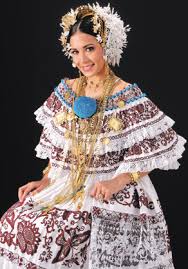
Folk music of Panama is the result of interbreeding that occurred between Spanish traditions, Indian and African. Used as instruments snare drum, drum bidder, the box, the churuca, the triangle is, accordion, female voice, chantey male voice.
Panamanian art
Panama's culture is a blend of Spanish, African, Native American and American. In pre-Hispanic times stood several cultures: Chiriqui, in the homonymous province and part of Costa Rica (predominantly stone burials and ceramics); culture of the region of Veraguas (is remarkable gold metallurgy, and ceramics) , culture Monagrillos in Parita Bay (smooth pottery stands), and Cocle culture, in the homonymous province and in the Azuero Peninsula (stylized ceramic varied and extraordinary jewelry and gold jewelry inlaid with precious and semiprecious stones, besides helmets and chest). See Pre-Columbian Art and Architecture. Panama still has many colonial buildings, including the cathedral and the church of Santo Domingo, the capital. In the old part of some cities are preserved houses with the typical Andalusian-style courtyards.

the 10 tourist atlractions in panama
Suscribirse a:
Entradas (Atom)